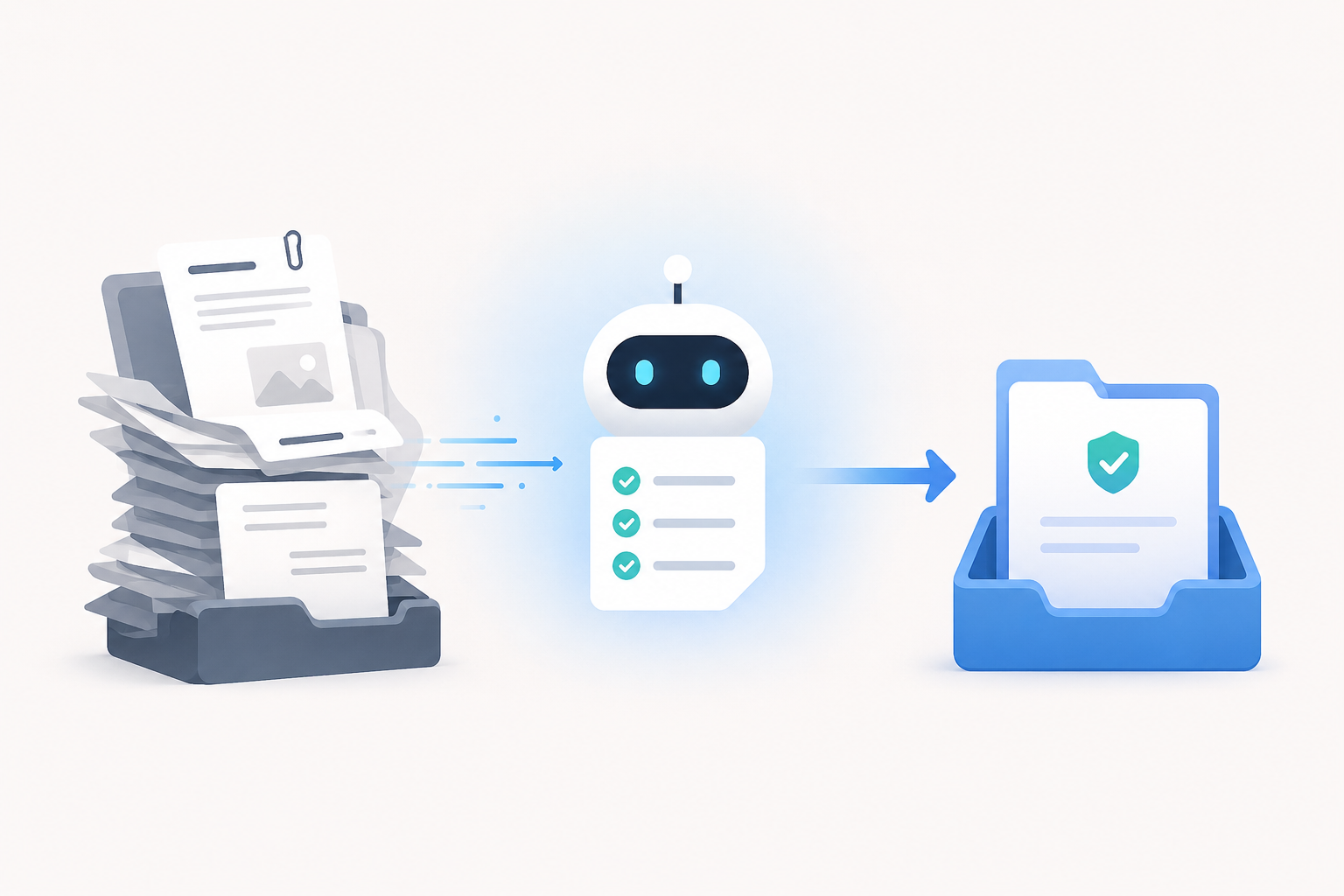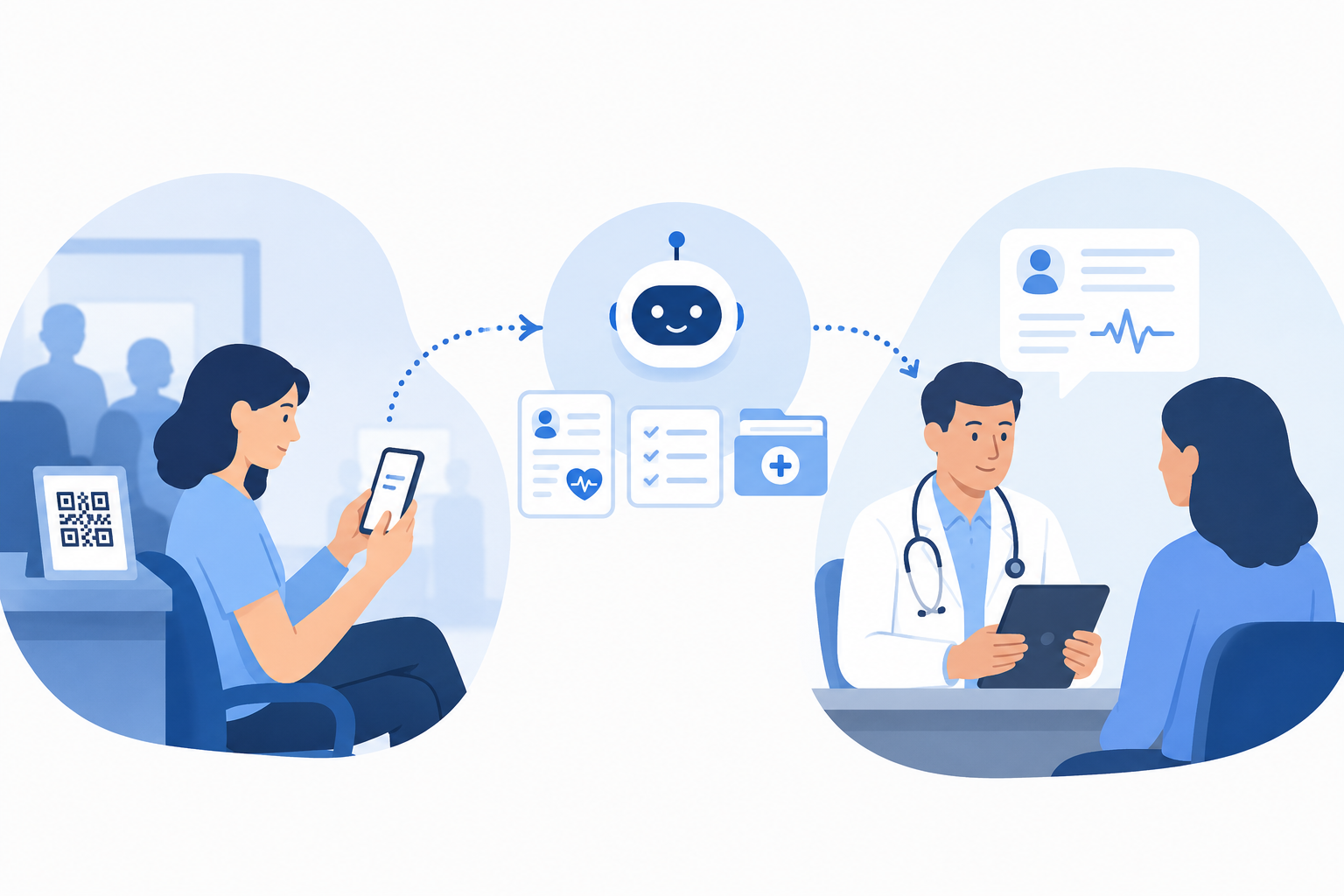
A few years ago, building an AI solution required specialist teams, long development cycles, and significant investment. Today you can connect a foundation model, write a prompt, add your enterprise knowledge, and have an agent answering questions within days. It feels almost magical — until someone asks, “How soon can we put this into production?”
Building an AI agent has never been easier
Many organizations experience the same moment. The agent understands a request. It retrieves the right information. It completes a workflow. The demonstration looks impressive.
Then the production question lands, and that is usually where the easy part ends.
The last 20% is where enterprise AI succeeds or fails
Building a proof of concept is rarely the biggest challenge. Modern models are remarkably capable, so an agent that performs well under ideal conditions is relatively straightforward to build. The real challenge begins when that agent meets the real world.
What the real world throws at an agent
- Ambiguous requests
- Incomplete information
- Conflicting data
- Changing business rules
- Integration failures
- Permission restrictions
- Unexpected user behavior
- Edge cases never seen in testing
As complexity increases, progress slows. A change that fixes one scenario may break another. Teams rewrite prompts, switch models, replace tools, and redesign workflows — without knowing which component is actually causing the problem. The AI itself is often not the issue. The challenge is understanding what happened, why it happened, and what needs to change.
Behind every answer is a complex execution process
From the user’s perspective, AI appears simple: a question goes in, an answer comes out. Behind that answer, an enterprise agent may run through eight distinct steps.
- Understand the request
- Retrieve knowledge
- Select tools
- Invoke APIs
- Execute workflows
- Apply business rules
- Validate outputs
- Produce response
Every additional step introduces another opportunity for failure — and the final response can look convincing even when the execution behind it was wrong.
| Where it breaks | What actually happens |
|---|---|
| Retrieval | The wrong document is pulled into context |
| Tool call | The right tool runs with incorrect parameters |
| Workflow | A step overlooks an important business rule |
| Knowledge | An outdated source produces a confident, incorrect answer |
This is the difference between an impressive AI demonstration and a dependable enterprise AI solution: not whether the answer looks right, but whether you can see how it was produced.
Enterprise AI needs an operational layer
Traditional software behaves predictably. Once deployed, its behavior changes only when developers change the code. Enterprise AI is fundamentally different — it is continuously evolving. Models improve, prompts evolve, knowledge grows, business rules change, new tools appear, and users introduce new scenarios. Unlike traditional software, AI is never truly “finished.”
It requires continuous configuration, orchestration, observation, and improvement. This is where Chocolate Factory comes in: Xtremax’s enterprise agentic AI platform, providing the operational and governance layer needed to run agents in production. Rather than treating AI as a black box, it gives teams the visibility and controls to manage it with confidence.
Think of Chocolate Factory as a real factory
A factory doesn’t turn raw materials into finished products in a single step. Every product passes through stages — and if something goes wrong, engineers don’t rebuild the entire factory. They identify the stage responsible and improve it. Enterprise AI needs the same discipline.
Assembly
Compose the agent from its model, prompts, knowledge, and tools.
Inspection
Observe each execution step, not just the final output.
Testing
Replay real scenarios and compare results as you change things.
Quality assurance
Guardrails, validation, and human approval on the steps that carry risk.
Continuous improvement
Refine the one component that needs attention, not the whole system.
A powerful model is only the starting point. Reliable AI also depends on the parts around it — configured, orchestrated, and governed as one complete system.
What reliable AI actually depends on
- Enterprise knowledge
- Prompts and instructions
- Business data
- Tools and APIs
- Workflow orchestration
- Business rules
- Guardrails
- Validation and human approvals
Observe. Configure. Improve.
Reliable AI isn’t achieved through trial and error. It comes from continuously improving the individual components that shape an agent’s behavior — refining prompts, comparing models, tuning retrieval, adjusting workflow steps, strengthening guardrails, and testing new scenarios. Instead of rebuilding the solution, teams improve the specific part that needs it.
One platform, not ten disconnected projects
Most organizations begin their AI journey one use case at a time — a customer service chatbot, an HR assistant, a finance copilot, a document search tool. Each delivers value, but each is often built independently, with its own prompts, models, tools, integrations, and governance. As adoption grows, so does the operational sprawl.
Isolated point solutions
Built one project at a time
- Separate prompts, models, and tools per project
- Governance reinvented each time
- Hard to monitor consistently
- Improvements don’t transfer between solutions
A unified AI platform
A shared operational foundation
- One place to configure and orchestrate agents
- Governance and observability as standard
- Every run visible in the same console
- Improvements compound across use cases
From AI experiments to enterprise AI
Access to powerful models is no longer the differentiator. The differentiator is the ability to operate AI reliably at enterprise scale. Models provide the intelligence, agent runtimes execute the work, and Chocolate Factory provides the operational and governance layer that brings everything together.
| From | To |
|---|---|
| AI demonstrations | Production-ready operations |
| Black-box responses | Observable execution |
| Trial-and-error changes | Targeted improvements |
| Isolated AI projects | A unified enterprise platform |
The first 80% proves an AI agent can work. The final 20% determines whether the business can trust it.
Chocolate Factory helps organizations manage that final 20% — turning AI experiments into reliable enterprise capabilities.
The short version
- A proof of concept proves capability. Production demands reliability.
- The last 20% — ambiguity, edge cases, and changing rules — is where AI projects stall.
- Every answer hides several steps of execution, and each one has to be observable.
- Once you run more than one agent, a platform beats a pile of point solutions.