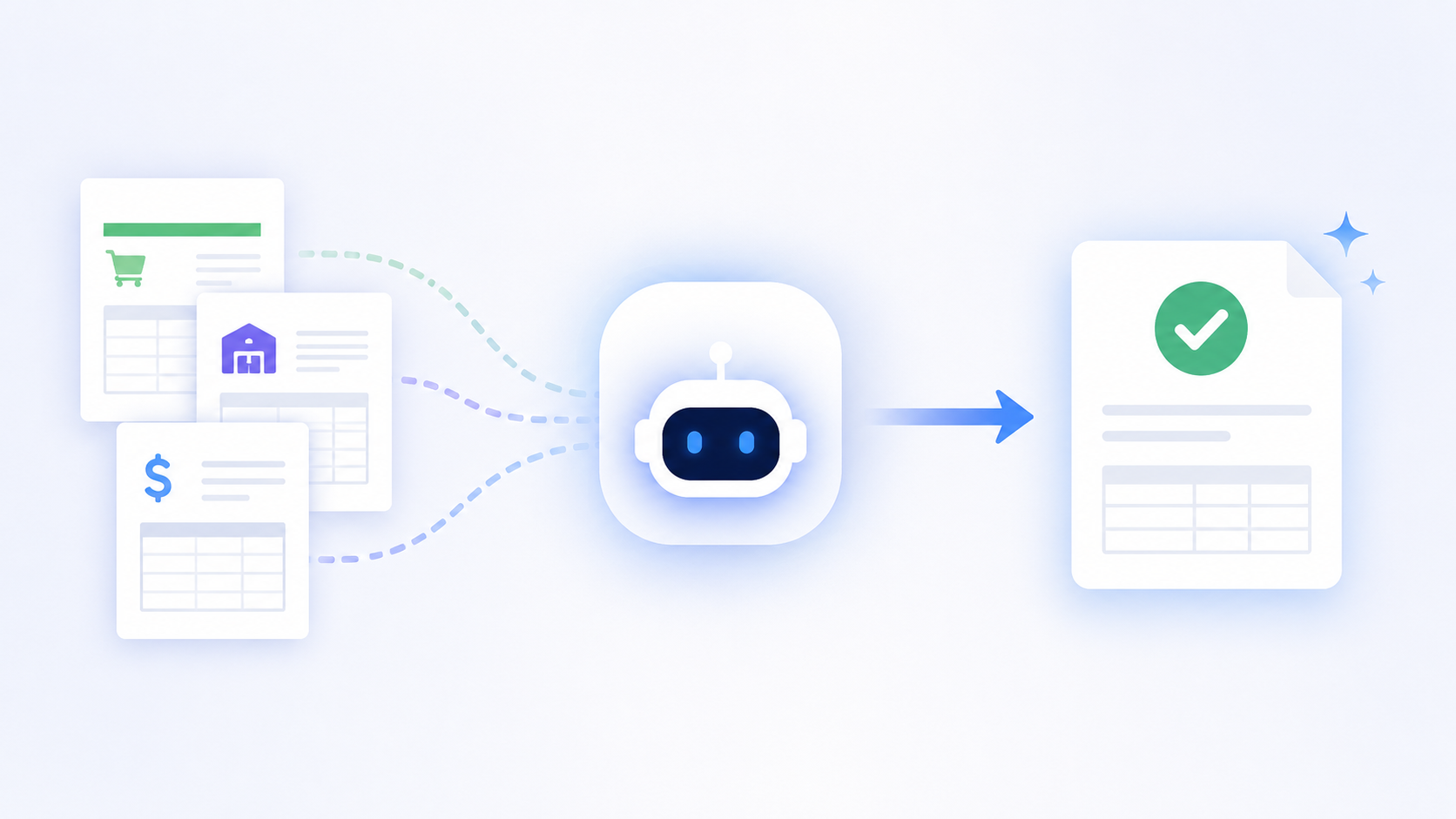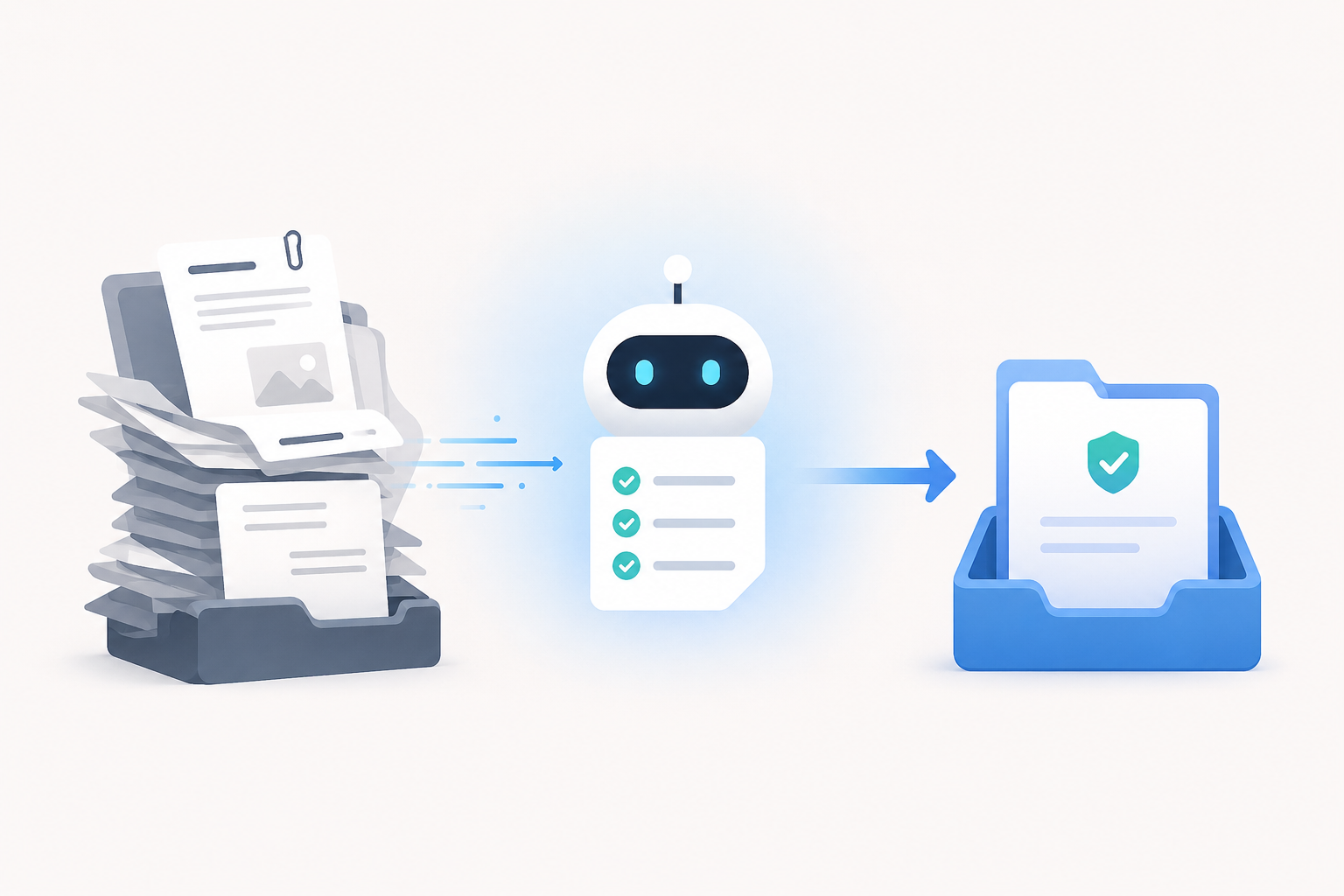
Every consultation starts with the same questions. What brings you in today? When did the symptoms start? Any existing conditions? Any medication? The questions are essential — but in a busy clinic they are asked again and again, consuming the very minutes that should be spent on care.
Doctors spend too long collecting what they still need to know
For doctors seeing dozens of patients a day, a large part of consultation time goes to collecting basic information, reviewing past records, and understanding context before the clinical discussion even begins. The challenge is not that these questions are unnecessary — it is that they eat into limited time.
As patient volumes rise, consultation time does not rise with them. That creates pressure for everyone.
Patients
Wait longer, and repeat the same information more than once.
Doctors
Have less time per patient, and start each visit from a blank state.
Hospitals
Face longer consultation cycles and inconsistent documentation.
What if patients could start sharing the right information while they wait, so doctors walk in already prepared?
The consultation journey is still too linear
In many clinics the patient journey follows a familiar, sequential path — and much of it happens after the doctor and patient are already in the room together.
- Register
- Wait
- Enter room
- Explain symptoms
- Answer questions
- Doctor reviews history
- Begin consultation
It works, but it isn’t efficient. Patients repeat information that could have been collected earlier. Doctors switch between conversation, record review, and documentation. Everyone is busy, but not all the time is used well.
An AI-powered pre-consultation assistant
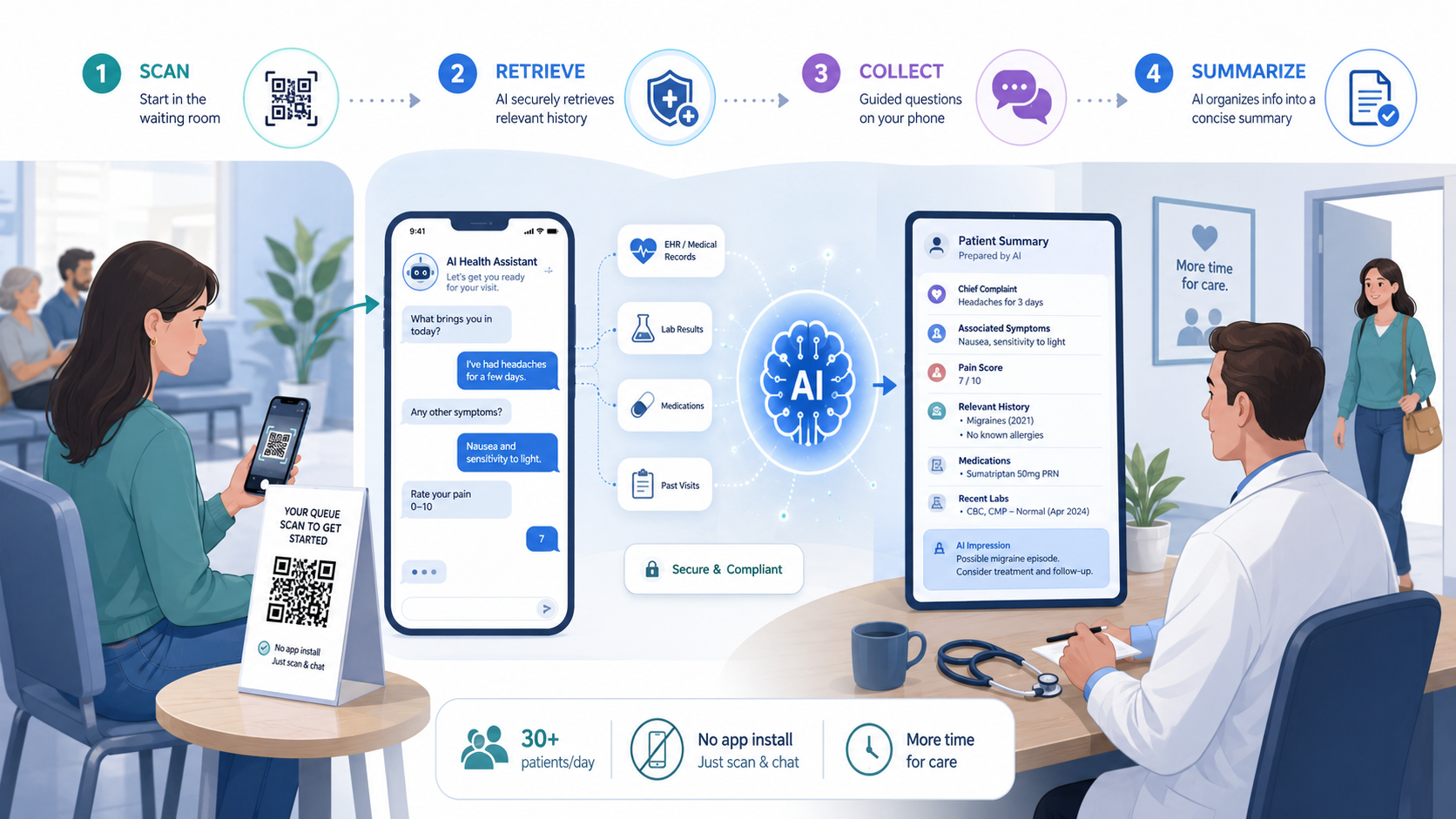
Instead of waiting passively, patients begin the pre-consultation process while still in the queue. The patient scans a QR code from the queue receipt, and a private, secure session opens on their phone. No app installation required. The assistant guides them through a natural conversation while the system retrieves their history in the background — so by the time they enter the room, the doctor is no longer starting from zero.
Four steps, before the doctor says hello
- 1
Scan
The patient scans a QR code while waiting, opening a secure session on a device they already have — no download, minimal friction.
- 2
Retrieve
The system pulls relevant medical history from connected hospital systems, electronic medical records, and FHIR-ready national health records where available.
- 3
Collect
A guided chat gathers symptoms in natural language, asking dynamic follow-up questions — a fever and body aches may prompt questions on duration, cough, travel, and severity.
- 4
Summarize
The collected information and retrieved context become a structured summary, ready for the doctor before the consultation begins.
What the doctor receives
- Chief complaint
- Symptom duration
- Relevant medical history
- Known allergies
- Risk indicators
- Suggested follow-up questions
- Context from previous records
Sarah’s visit
Sarah, a 35-year-old professional, arrives with fever and body aches. Dr. Adrian sees more than 30 patients a day and, in the current process, would review her records while managing limited time. With the assistant, Sarah starts earlier — and the doctor starts prepared.
| Today | With pre-consultation | |
|---|---|---|
| Where intake happens | In the consultation room | In the queue, before the visit |
| History review | Manual, during the visit | Retrieved automatically — flu record, penicillin allergy surfaced |
| The doctor’s first minutes | Basic questions | Assessment, clarification, and diagnosis |
The result is not AI replacing the doctor. The result is AI preparing the doctor — reducing administrative friction and improving readiness, without touching the clinical relationship.
Better preparation for every consultation
For patients
Less repetition and a smoother, faster experience.
For doctors
Faster understanding, better context, more time to focus on treatment.
For hospitals
More consistent documentation and shorter consultation cycles.
Powered by Chocolate Factory
A pre-consultation assistant is not just a chatbot. It works with sensitive data, connects to healthcare systems, retrieves the right information, asks relevant follow-up questions, produces structured summaries, and operates within clear boundaries. It is built on Xtremax’s Chocolate Factory agentic AI platform.
Platform capabilities behind the assistant
- Configurable prompts and models
- Agent observability
- AI workflow orchestration
- Multi-agent platform design
- Integration with AWS AI services
- Governance, security, and scalability
One agent today, many healthcare agents tomorrow
The pre-consultation assistant is one example of what agentic AI can do in healthcare. The same platform approach supports many more — and they gain value when built as part of a shared platform rather than disconnected point solutions.
Record summarisation
Condense long medical histories into a clinician-ready view.
Documentation assistants
Support for SOAP notes and coding.
Contact centre agents
Handle routine patient enquiries and routing.
Bed management
Track capacity and coordinate patient flow.
Disease surveillance
Watch signals across populations for early warning.
Command-centre intelligence
Executive visibility across the operation.
Healthcare teams don’t need more complexity. They need tools that reduce repetitive work, improve preparation, and support better patient care. AI does not replace the doctor. AI prepares the doctor — and when doctors are better prepared, they have more time to do what matters most: care for patients.
The short version
- Intake moves to the waiting room, so consultation time can go to care.
- A QR code and the patient's own phone — nothing to install.
- The doctor opens the room with a structured summary instead of a blank state.
- AI prepares the doctor; it does not touch the clinical relationship.