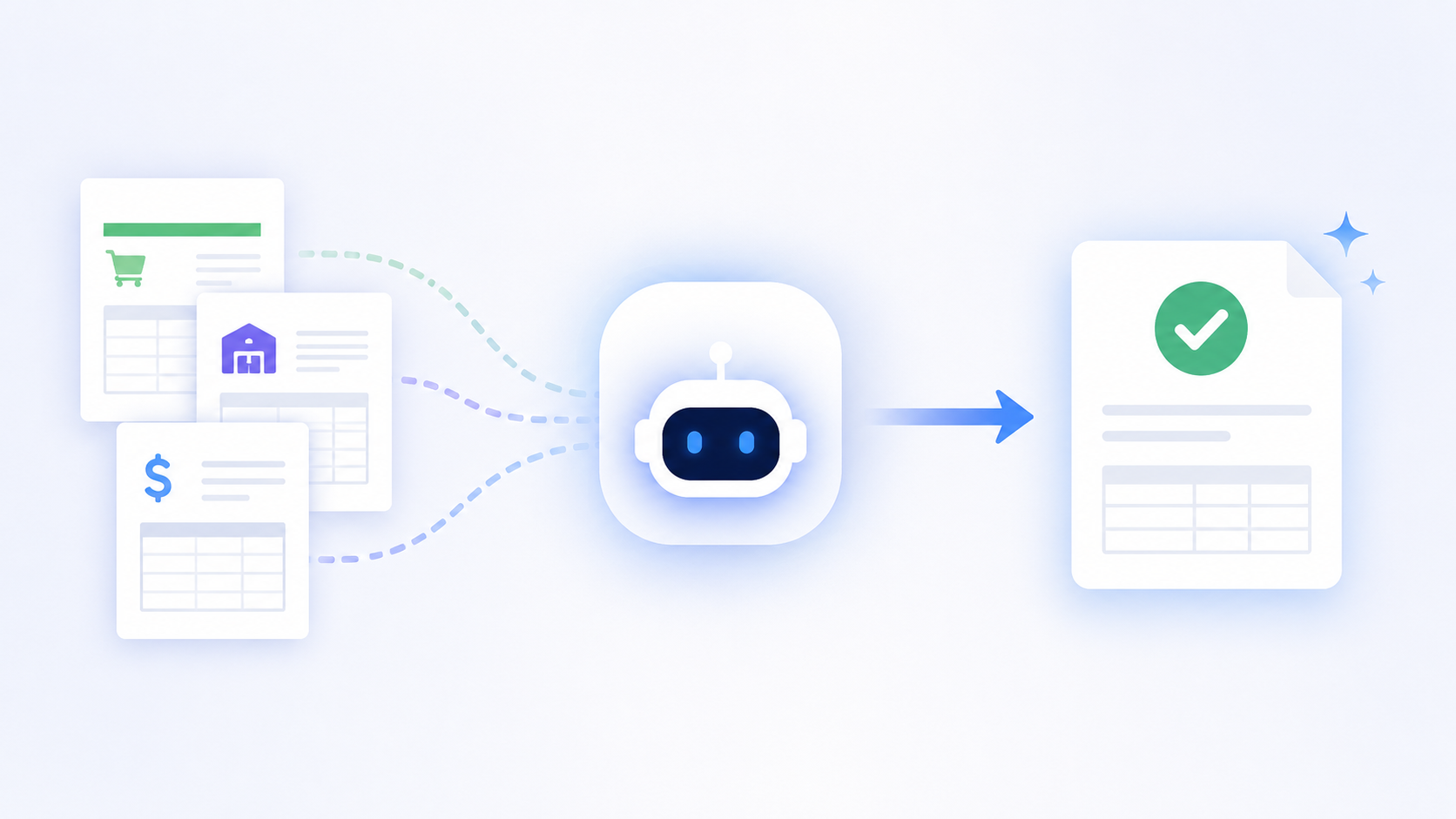
A claim arrives with a policy number, a handful of documents, and no context. Before an adjuster can make a decision, someone has to work out what kind of claim it is, whether the file is complete, and how urgent it is — and that sorting happens the same way for every claim, every time.
Every claim starts with the same manual sort
Adjusters lose the first hours of a case just getting oriented: reading the intake form, checking which documents are attached, cross-referencing the policy, and deciding where the claim should go. None of it is adjudication — it’s the sorting that has to happen before adjudication can start.
It is also the part of the job most exposed to backlog. When claims arrive faster than they can be sorted, the queue grows before anyone has even looked at the substance of a case.
Claimants
Wait longer for a first response, with no visibility into where their claim sits.
Adjusters
Spend triage time on sorting instead of the judgment calls only they can make.
Insurers
Carry a growing backlog and inconsistent turnaround across the team.
What if every claim arrived already classified, checked for completeness, and routed to the right queue — before an adjuster opened the file?
Intake is still a queue, not a pipeline
In most claims teams, a submission moves through the same sequence regardless of how simple or urgent it is — and the early steps depend on whoever picks it up next.
- Submit
- Sit in queue
- Adjuster opens file
- Check documents
- Classify
- Check coverage
- Begin adjudication
It works, but unevenly. A straightforward claim can wait behind a complex one simply because of queue order, and an incomplete file often isn’t caught until someone has already spent time reading it.
An AI-powered triage agent
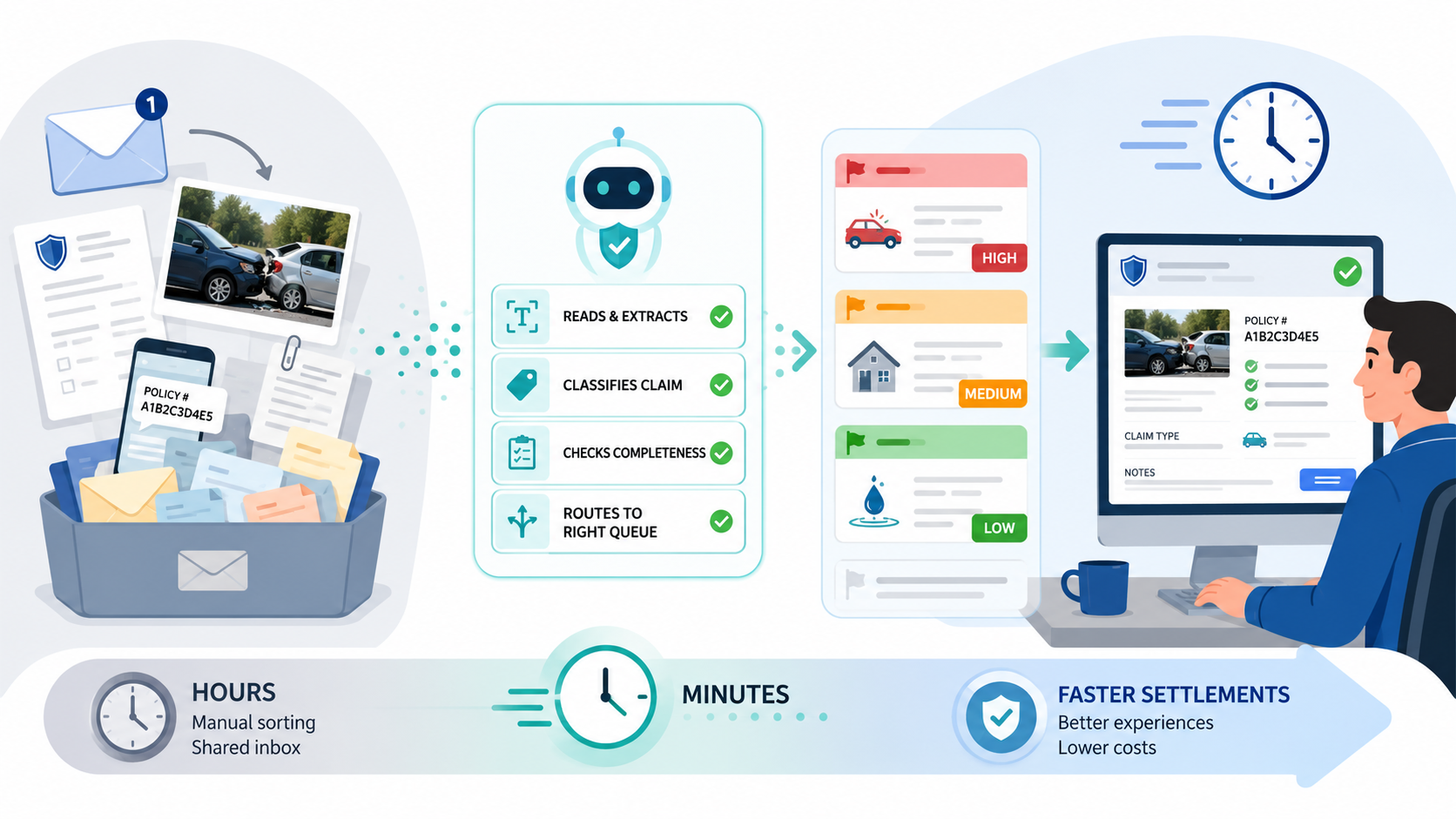
Instead of landing in a shared inbox, a submission is triaged the moment it arrives. The agent reads the intake form and attachments, checks them against the policy, classifies the claim type and severity, and routes it to the queue where it belongs — flagging anything missing before it reaches an adjuster at all.
Four steps, before an adjuster opens the file
- 1
Intake
The agent picks up the submission the moment it arrives, whatever channel it came through — web form, email, or a carrier feed.
- 2
Classify
It reads the claim narrative and attachments to determine claim type, estimated severity, and the policy it falls under.
- 3
Verify
It checks the file against policy terms and a completeness checklist, catching missing documents or coverage mismatches early.
- 4
Route
The claim lands in the right queue with a structured summary attached, so the adjuster opens a file that's already been read once.
What the adjuster receives
- Claim type and estimated severity
- Policy and coverage check
- Completeness status
- Flagged discrepancies
- Suggested queue and priority
- A structured summary of the file
A routine auto claim
A policyholder submits photos, a repair estimate, and a short description after a minor collision. In the current process, that claim sits in the same queue as every other submission until an adjuster reaches it. With the triage agent, it is classified and routed within minutes — and the adjuster who picks it up starts with the coverage question already answered.
| Today | With AI triage | |
|---|---|---|
| Where sorting happens | In the adjuster's queue, one file at a time | At intake, before the queue |
| Missing documents | Caught mid-review, after time is spent | Flagged immediately, before assignment |
| The adjuster's first minutes | Reading and classifying | Coverage decisions and next steps |
The result is not AI deciding the claim. The result is AI clearing the path to the decision — so the adjuster’s time goes to judgment, not sorting.
Faster, more consistent triage
For claimants
A faster first response and a clearer sense of where things stand.
For adjusters
Files that arrive pre-checked, with the routine sorting already done.
For insurers
Consistent turnaround and a queue that reflects actual priority.
Powered by Chocolate Factory
A claims triage agent works with sensitive documents, checks against policy data, applies consistent rules across thousands of claims, and hands off cleanly to the humans who make the final call. It is built on Chocolate Factory, Xtremax’s agentic AI platform.
Platform capabilities behind the agent
- Configurable prompts and models
- Agent observability
- AI workflow orchestration
- Multi-agent platform design
- Integration with existing claims systems
- Governance, security, and scalability
One agent today, a claims pipeline tomorrow
Triage is the first stage a claims agent can take on — the same platform approach extends further down the pipeline, and each stage compounds when it’s built on shared infrastructure rather than as a one-off tool.
Document extraction
Pull structured data out of estimates, reports, and forms.
Claimant updates
Automated status updates in plain language, at every stage.
Fraud signals
Surface anomalies across a claim for a human to review.
Adjudication support
Draft a recommended decision for the adjuster to confirm.
Portfolio monitoring
Watch claim volume and severity trends as they emerge.
Operational reporting
Executive visibility into throughput and backlog.
Claims teams don’t need more dashboards. They need the routine work handled consistently, so adjusters spend their time on the calls that actually require judgment. AI does not replace the adjuster. AI clears the desk — and a clear desk means faster, fairer decisions for the people waiting on them.
The short version
- Triage is the first bottleneck in every claim, and it is mostly classification.
- An agent classifies, checks completeness, and routes before an adjuster opens the file.
- Intake runs nights and weekends, so claims start moving outside office hours.
- Adjusters spend their hours on assessment instead of sorting.